Organic Farming in India: A Green Revolution Awaits
ol{margin:0;padding:0}table td,table th{padding:0}.c0{color:#000000;font-weight:400;text-decoration:none;vertical-align:baseline;font-size:13pt;font-family:”Arial”;font-style:normal}.c8{color:#000000;font-weight:400;text-decoration:none;vertical-align:baseline;font-size:16pt;font-family:”Arial”;font-style:normal}.c4{color:#000000;font-weight:400;text-decoration:none;vertical-align:baseline;font-size:17pt;font-family:”Arial”;font-style:normal}.c2{color:#000000;font-weight:400;text-decoration:none;vertical-align:baseline;font-size:11pt;font-family:”Arial”;font-style:normal}.c9{padding-top:18pt;padding-bottom:6pt;line-height:1.149999976158142;page-break-after:avoid;text-align:left}.c7{padding-top:0pt;padding-bottom:0pt;line-height:1.149999976158142;text-align:left;height:11pt}.c6{padding-top:18pt;padding-bottom:4pt;line-height:1.149999976158142;page-break-after:avoid;text-align:left}.c3{padding-top:14pt;padding-bottom:4pt;line-height:1.149999976158142;page-break-after:avoid;text-align:left}.c1{padding-top:12pt;padding-bottom:12pt;line-height:1.149999976158142;text-align:left}.c5{background-color:#ffffff;max-width:451.4pt;padding:72pt 72pt 72pt 72pt}.title{padding-top:24pt;color:#000000;font-weight:700;font-size:36pt;padding-bottom:6pt;font-family:”Arial”;line-height:1.0;page-break-after:avoid;text-align:left}.subtitle{padding-top:18pt;color:#666666;font-size:24pt;padding-bottom:4pt;font-family:”Georgia”;line-height:1.0;page-break-after:avoid;font-style:italic;text-align:left}li{color:#000000;font-size:11pt;font-family:”Arial”}p{margin:0;color:#000000;font-size:11pt;font-family:”Arial”}h1{padding-top:12pt;color:#000000;font-weight:700;font-size:24pt;padding-bottom:12pt;font-family:”Arial”;line-height:1.0;text-align:left}h2{padding-top:11.2pt;color:#000000;font-weight:700;font-size:18pt;padding-bottom:11.2pt;font-family:”Arial”;line-height:1.0;text-align:left}h3{padding-top:12pt;color:#000000;font-weight:700;font-size:14pt;padding-bottom:12pt;font-family:”Arial”;line-height:1.0;text-align:left}h4{padding-top:12.8pt;color:#000000;font-weight:700;font-size:12pt;padding-bottom:12.8pt;font-family:”Arial”;line-height:1.0;text-align:left}h5{padding-top:12.8pt;color:#000000;font-weight:700;font-size:9pt;padding-bottom:12.8pt;font-family:”Arial”;line-height:1.0;text-align:left}h6{padding-top:18pt;color:#000000;font-weight:700;font-size:8pt;padding-bottom:18pt;font-family:”Arial”;line-height:1.0;text-align:left}
Organic Farming In India: A Green Revolution Awaits
Imagine a world where our food not only nourishes us but also takes care of the planet. Sounds dreamy, right? Enter organic farming in India, a vibrant tapestry woven from tradition, health, and sustainability. This approach isn’t merely a trend: it’s a revolution we’re proud to champion. So, gather around as we dig into the earth and uncover the juicy details of why organic farming deserves a spotlight brighter than the sun.
The Importance Of Organic Farming
When we talk about organic farming in India, it’s crucial to highlight its importance, underscoring the profound impact it has on our environment and health.
Environmental Benefits
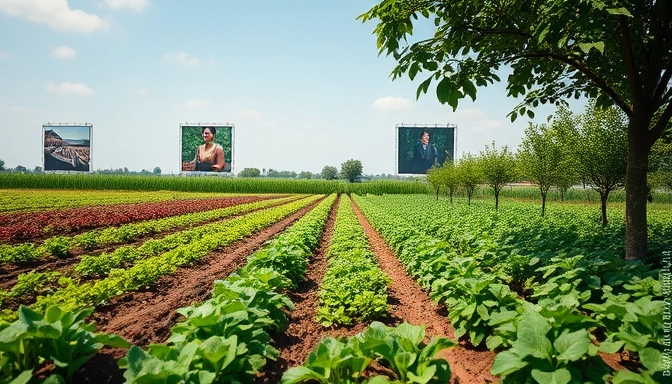
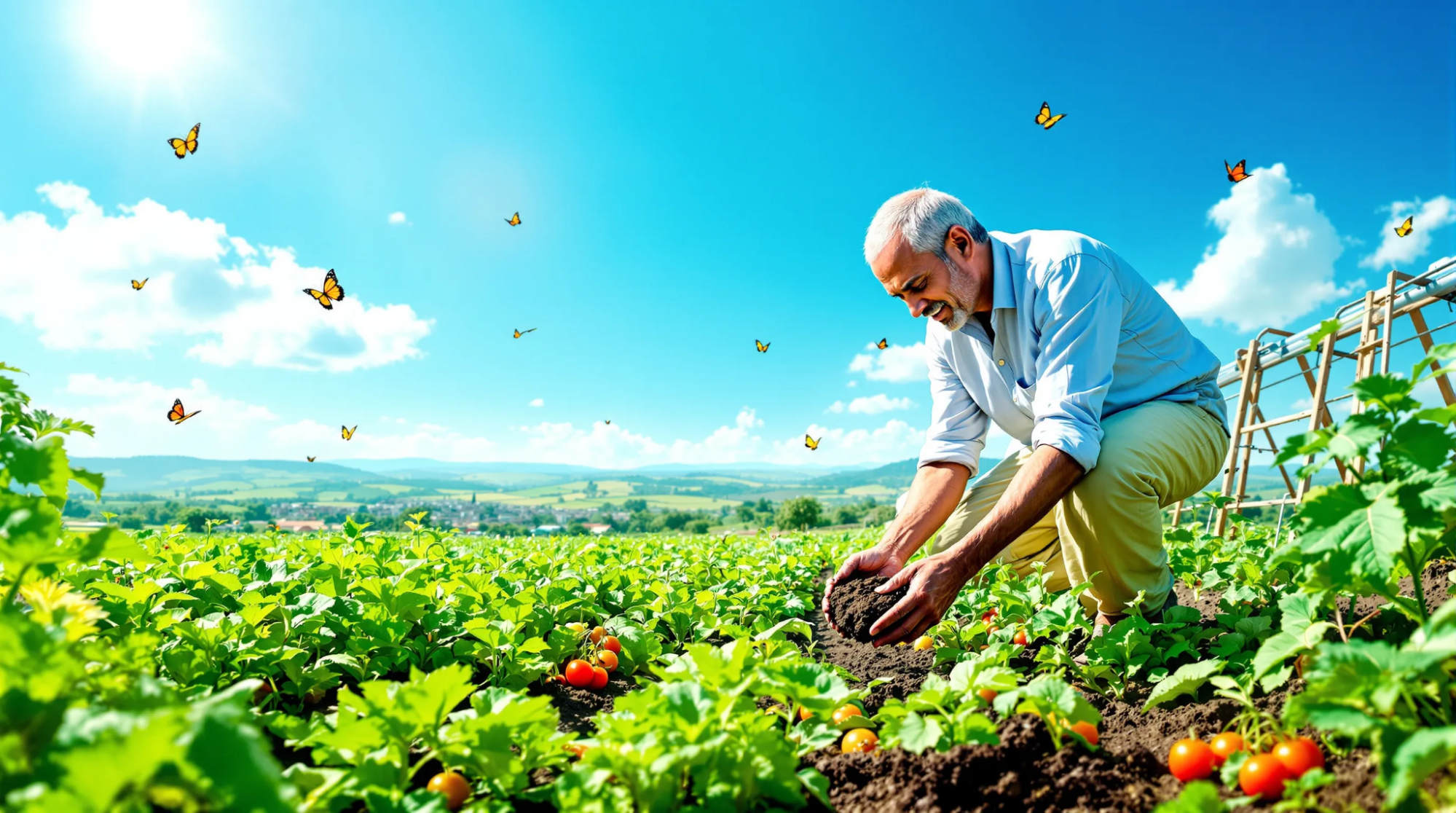
First, let’s zero in on the environmental perks. Organic farming boosts biodiversity and encourages healthier ecosystems. By eschewing synthetic fertilizers and pesticides, we help preserve the delicate balance of nature. Have you noticed the vibrant colors in our landscapes? That’s not just a coincidence: it’s nature’s way of saying thank you.
Health Benefits
Then, we also must consider our health. Consuming organic produce reduces our exposure to harmful chemicals and ensures we’re getting the nutrients we truly need. We’ve all heard the saying, ‘You are what you eat,’ and we firmly believe it. With organic choices, we have the chance to eat wholesome, nutrient-rich food that helps us thrive. Who wouldn’t want a vibrant, energetic life?
As we reflect on these benefits, it’s evident that organic farming is more than just an agricultural method: it’s a lifestyle choice that we really want to embrace.
Economic Viability
Now, let’s shift gears and discuss how organic farming can be a win-win economically. We know what you’re thinking, can we really make a living off organic farming? Spoiler alert: Absolutely.
Government Initiatives And Support
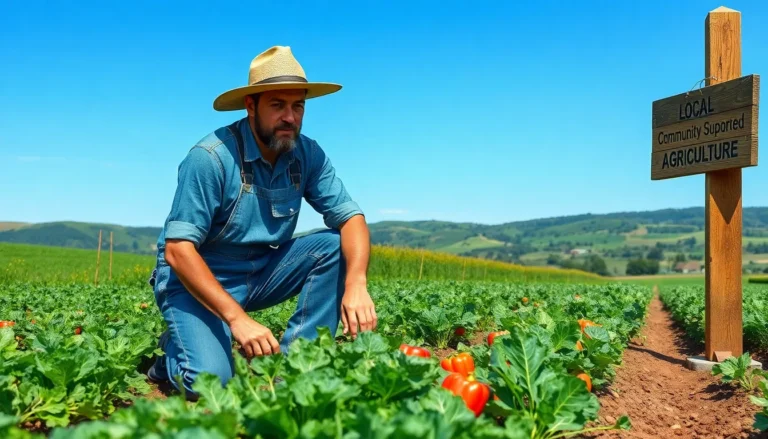
The Indian government has recognized this potential and steps are being taken. Several initiatives and subsidies have been rolled out to support organic farmers. From training programs to financial assistance, we see a genuine commitment to fostering an organic farming community. This support not only helps farmers kickstart their ventures but also opens doors to new economic opportunities for rural communities. This isn’t just about crops: it’s about livelihoods.
Challenges Faced By Organic Farmers
But, hold on. It’s not all sunshine and rainbows. Organic farming does come with its share of challenges, and we need to acknowledge that.
Market Demand And Consumer Awareness
One of the hurdles we face is market demand and consumer awareness. While more of us are becoming aware of the benefits of organic produce, there’s still a significant knowledge gap in the broader public. Many people still think organic equals expensive, and that misconception can limit their willingness to explore these healthier options.
Also, fluctuations in demand and limited access to larger markets can be daunting for organic farmers. It’s a challenge we’re all in together, and increasing awareness is key to bridging this gap.
Future Prospects Of Organic Farming In India
Looking ahead, the future of organic farming in India is really quite exciting. The global trend towards sustainability is gaining momentum, and we’re positioned perfectly to capitalize on it.
As consumers become increasingly health-conscious, the demand for organic products is set to soar. We have the potential to lead this change, harnessing local resources while contributing to the global organic marketplace. Also, innovative agricultural practices continue to advance, making organic farming more efficient and scalable. Our journey into the future looks bright, and we’re enthusiastic about the prospects ahead.